
-
Recent Posts
Recent Comments
Archives
Categories
Finmeccanica, Russian Helicopter: bene joint venture con Helivert – Corriere di Arezzo
Posted in Helicopters
Leave a comment
Poles end talks on multibillion deal with Airbus Helicopters
An important update to my earlier note on the subject published on September 11.
via Poles end talks on multibillion deal with Airbus Helicopters
Posted in Uncategorized
Leave a comment
Joint Rotorcraft Demonstrators on Track to Fly in Late 2017
Neat update
Posted in Uncategorized
Leave a comment
Fast Rotorcraft, US and European Way
We are witnessing one of the more exciting evolutions in modern helicopter history: the race for speed. To obtain dramatic improvements – unachievable by conventional helicopters – manufacturers have been exploring innovative technologies such as tilt-rotors and compound helicopters.
Notwithstanding the majority of recent developments originated from US firms, such as the Bell Boeing V-22 Osprey, the now Leonardo AW609, Sikorsky’s X2 and its successor S-97 Raider, also in Europe the urge for speed has prompted Airbus Helicopter to experiment the X3 test bed.
Nothing compares though with what is being developed in USA under the overarching FVL joint military program and in Europe within the Clean Sky 2 Program.
The race for “Capability set 3” rotorcraft (e.g., Black Hawk and Apache replacement) is engaged by and between the three major US manufacturers and we are observing a fiery competition among two disruptive technologies. It will be the Tilt Rotor (Bell Helicopter and Lockheed Martin V280 Valor) against the Compound (Sikorsky-Boeing SB-1 Defiant).

At the end, the US Army – as well as the Marine Corps and the Air Force – will choose the technology that better fits the operational requirements (or it may be both?); OEMs will manufacture hundreds of units and the technology will become mature and ready to be fielded also in non-military operations.
Competitions for the other capability sets to complement the 1 to 5 scale are not started yet, but they already promise unthought-of developments.
Although the same need for speed is shared in Europe, the approach is fundamentally different. Through the Clean Sky 2 Program – a Public-Private Partnership between the European Commission and the industry, with a strong emphasis on SMEs – the EU leverages innovation across Europe to develop breakthrough technologies to significantly increase the environmental performances of airplanes and air transport.
The Program envisages three Innovative Aircraft Demonstrator Platforms (IADPs), from Fast Rotorcraft to Regional Aircraft and Large Passenger Aircraft.
The Fast Rotorcraft IADP consists of two separate demonstrators, the NextGenCTR tilt-rotor (Program led by Leonardo) and the LifeRCraft compound helicopter (Program led by Airbus Helicopter), aiming at delivering more speed along with range, capacity, productivity, efficiency and sustainability.

The companies involved in this Program encompass a large number of European aeronautical enterprises, to include several SMEs. It is the aim of Clean Sky 2 that the participating companies will apply the break throw technologies being developed to the next generations of aircraft, in timescales otherwise unachievable.
Posted in Uncategorized
Leave a comment
Strategie e strumenti per la promozione del sistema economico-produttivo sui mercati globali: Investimenti e cooperazione industriale con i Paesi dell’America Latina
RSVP a studidiplomatici@libero.it

Posted in Uncategorized
Leave a comment
MSPO – the Polish International Defense Industry Exhibition held in Kielce – has now ended without any significant development for the Polish Combat Helicopter Procurement Program (Kruk)

Poland’s previous government led by Civic Platform (Platforma Obywatelska) had launched an ambitious military modernization program aiming at the acquisition of up to 70 utility helicopters to fulfil transport, CSAR, ASW, medevac and Special Forces missions, and up to 32 combat rotorcraft. The requirement was to replace the ageing fleet of former Soviet helicopters and the selected supplier was to help develop the domestic aerospace and defense industry through industrial participation, localization and technology transfer.
Although not clearly stated, there were actually a number of other strategic interest behind this program, among which:
– Desire to disengage from Russian suppliers to support and maintain the military helicopter fleets;
– Ambition to play a stronger role as a NATO ally, able and willing to participate in international operations under shared operational commands;
– Willingness to increase Poland’s influence within the EU to match its contribution in terms of geographical size, population and GDP.
Following an initial shortlisting of three manufacturers – namely AgustaWestland, Airbus Helicopters and Sikorsky – in April 2015 the Polish Government had eventually selected Airbus Helicopters’ H225M Caracal, as the platform that could better meet all the different (and often times, diverging) utility operational requirements.
Many were caught by surprise after the announcement, particularly because the winner was the only one, among the shortlisted companies, not having a strong industrial presence in Poland and this was seen as an added complexity to meet the tough industrial participation and localization requirements. In my opinion though, there was a failure to understand the implications of the Russian military intervention in Ukraine, which occurred before the conclusion of the tender. This dramatic event shifted the priorities for the Polish Government, who saw in a battle-proof platform a more comfortable choice despite the lesser industrial participation appeal. The Polish Government’s European agenda made the rest.
The outcome of the elections in October 2015 have turned things complicated for Airbus Helicopters, with the current Law and Justice (Prawo i Sprawiedliwość) Government re-evaluating the decisions previously made, particularly concerning technology transfer matters.
Despite the persisting difficulties, the company now seems more optimistic and hopes to close soon negotiations in a satisfactory manner. In any case, the other two shortlisted companies are ready to take over at any time and even Bell Helicopter is suggesting that the UH-1Y would be a viable alternative.
At MSPO Lockheed Martin unveiled the armed version of the Sikorsky UH-60 Black Hawk helicopter, declaring that its gunship configuration could also satisfy the Polish combat requirements.
In the meantime, Leonardo-Finmeccanica’s PZL-Świdnik is quietly completing the upgrade of the Polish Sokol helicopters to the W-3PL Głuszec combat configuration.
We’ll see …
After this long preamble, necessary to set the scene for the combat helicopter program, the lack of any revealing announcement during MSPO does not come as a surprise.
According to its initial plans, with the ‘Kruk’ (Raven) competition Poland is seeking to acquire between 16 and 32 attack helicopters – depending on budget constraints – to replace the current fleets of Mil Mi-24s. Contenders are:
– Airbus Helicopters with the EC665 Tiger HAD (MTU engines);
– Bell Helicopter with the AH-1Z Cobra (General Electric engines);
– Boeing with the AH-64 Apache (General Electric engines);
– Turkish Aerospace Industries with the T129 ATAK (LHTEC engines).
(N.B. the important role that engine manufacturers can play in support to OEMs, often times is not reported, nor consistently sought after by some manufacturers)
All contenders are in discussions with the domestic defense equipment manufacturer – the Polish Armament Group (Polska Grupa Zbrojeniowa – PGZ) – preparing the grounds for thorough, direct and indirect, industrial collaboration in case of being selected (By the way, for any of the programs). Following Turkish Aerospace Industries’ bold statement in February, the LoI announced by Boeing in May, and the deal signed by Bell Helicopter in June, during MSPO also Leonardo-Finmeccanica and Lockheed Martin have signed compelling Letters of Intent with PGZ.
Indeed, for the industrial component of the tender to be satisfied, closing a deal with PGZ is crucial, but the engagement of qualified Polish SMEs is equally important. Again, involving them in not only helicopters’ production and through-life sustainment, but also offering real access to the manufacturer’s international supply chain.
A successful OEM must have secured a vast support network throughout the country’s Voivodeships and shall have engaged the still powerful Unions in constructive dialogues. Universities can play an important role, as their engagement would help “discharging” the contractual obligations, offering at the same time access to highly qualified research centers already extensively involved in advanced research activities at European level.
Even this will not be enough though: geo-political aspects will be the essence of the decision. Poland will arguably expect that its role as one of NATO’s eastern outposts and EU’s border watch keepers will determine benevolence and extraordinary concessions from the winning manufacturer’s Government. A Nation-wide coordinated effort is therefore required in order to align all the industrial, financial, political and military drivers.
In other words, winning contracts of such a magnitude in Poland (and elsewhere as well, albeit the strategy will differ on a case-by-case and country-by-country basis) requires much more that “simply” having the right product, at the right price, and the manufacturer enjoying credibility for consistent deliveries on time and on quality.
What an interesting race!
Posted in Uncategorized
Leave a comment
USAF plans to release new RFI for Huey replacement
via USAF plans to release new RFI for Huey replacement
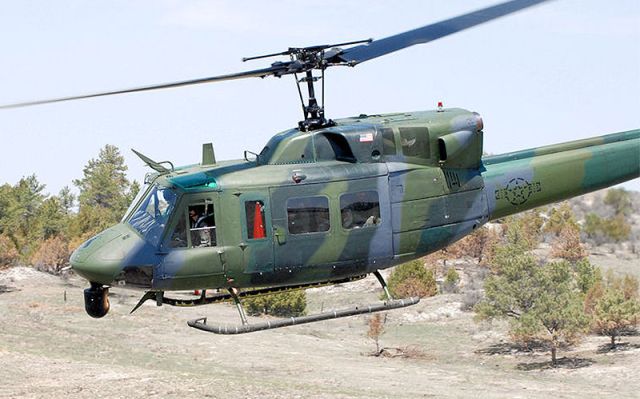 After so many failed attempts in recent years, it seems that the USAF is finally going to have the old UH-1Ns for ICBM bases support replaced. In this case, it will be another major military helicopter acquisition program, confirming the cyclic pattern of the industry, which is experiencing a dramatic standstill in the once bullish offshore market. Question is, what will be the actual mission requirements and hence how many contenders will offer their platforms?
Posted in Uncategorized
Leave a comment
EXCLUSIVE: Meet Bell’s X-247, Armed Tiltrotor Drone For Marines « Breaking Defense – Defense industry news, analysis and commentary
Interesting. If this goes through, it will a clever way of re-aligning the requirements of the Marine Corps with those of the Army with the FVL platforms
Posted in Uncategorized
Leave a comment

 MXP Aerospace LLC